Before you start petitioning the planetary gods for favors, you might want to familiarize yourself with their reputations. Zeus possessed enormous authority and governed divine justice, although his personal conduct frequently resembled that of a powerful executive who believed the rules were intended for the employees. Aphrodite inspired some of mythology’s greatest romances while demonstrating that love and good judgment are not necessarily on speaking terms. And Cronos, terrified that his children would eventually overthrow him, decided the most practical solution was to swallow them whole. That’s certainly one approach to succession planning, although I suspect most human resources departments would recommend exploring other options.
These are the personalities behind the seven classical planets, whose powers have been invoked by magical practitioners for centuries. Their mythology reveals a collection of complicated divine characters whose activities encompass nearly every aspect of human existence. They fall in love, wage war, accumulate wealth, establish kingdoms, and occasionally destroy everything around them because someone failed to show sufficient respect. Frankly, Olympus sounds like an exhausting place to work.
Yet beneath the scandalous behavior lies an elaborate system of planetary symbolism that has influenced astrology, alchemy, and ceremonial magic throughout Western history. Each planet governs particular activities and possesses qualities that practitioners traditionally seek to engage through ritual. Understanding those qualities is essential because selecting the appropriate planetary power involves more than identifying which god happens to specialize in fulfilling your latest ambition.
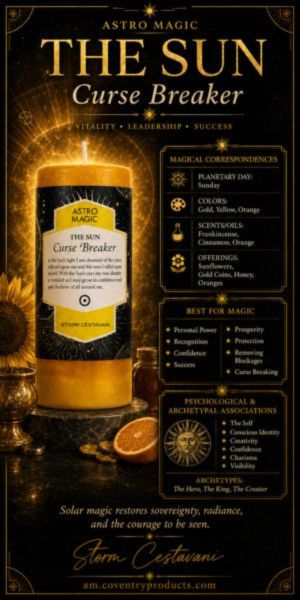 The Sun: Apollo, Sol, and the Problem of Being Important
The Sun occupies a position of extraordinary importance in traditional astrology, representing vitality, authority, recognition, and the power associated with rulership. Solar magic draws upon these associations through workings intended to strengthen confidence, attract recognition, establish influence, or improve an individual’s standing in the world.
Although the Roman Sol is the direct personification of the Sun, Apollo became closely associated with solar imagery, particularly in later classical traditions. Apollo’s mythology offers a fascinating portrait of divine brilliance accompanied by considerable demands for respect. He governs prophecy, music, healing, and artistic excellence, yet he is also capable of punishing those who challenge his authority. The god’s relationship with the satyr Marsyas, who dared compete against him musically, ended with consequences that make modern talent competitions seem positively civilized.
This combination of illumination and authority helps explain the magical significance of the Sun. Solar workings are particularly appropriate when individuals seek recognition for their abilities, want to develop leadership, or need greater confidence in their capacity to occupy a visible position.
Consider someone who possesses considerable professional talent but consistently allows other people to receive credit for their accomplishments. A solar working might focus on developing personal authority and becoming more comfortable with recognition. The psychological observation here is relatively straightforward: possessing ability and allowing that ability to become visible are sometimes two very different accomplishments.
The Sun can also represent excessive pride and the conviction that one’s importance should be universally acknowledged. Anyone contemplating solar magic might therefore consider whether they genuinely need more authority or simply want everyone else to recognize how extraordinary they already believe themselves to be.
The Moon: Luna, Selene, and the Need for Security
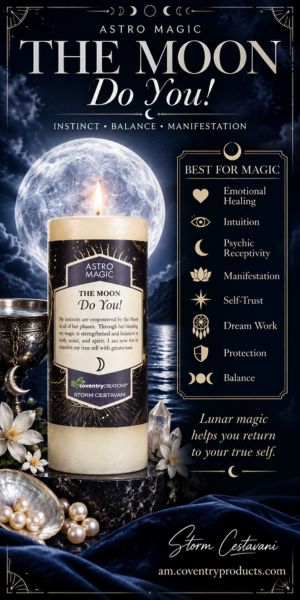 The Moon governs the changing conditions of everyday life, including emotional security, domestic concerns, bodily rhythms, and the instinctive needs that influence human behavior. Lunar magic traditionally addresses protection, family matters, dreams, intuition, the body, and circumstances requiring receptivity or adaptation.
Greek mythology identifies Selene as the divine personification of the Moon, while Artemis and Hecate acquired important lunar associations in various religious and magical traditions. These figures express different dimensions of lunar symbolism, ranging from the Moon’s illuminating presence at night to its relationship with thresholds, wilderness, and the mysteries surrounding human existence.
Selene’s romance with Endymion is particularly revealing. According to versions of the myth, the beautiful young man was granted an enduring sleep that preserved his youth, allowing Selene to continue visiting him. It’s a touching arrangement until you consider that a relationship with someone who spends eternity unconscious offers relatively limited opportunities for emotional reciprocity.
The myth provides an interesting illustration of the lunar desire to preserve what feels precious, even when preservation requires suspending the natural process of change.
Lunar workings can be useful when someone wants to establish greater security in their home, health related matters, address family concerns, or cultivate an atmosphere of emotional protection. The Moon’s traditional association with fluctuation also makes lunar symbolism relevant to matters involving transitions and changing circumstances.
Unlike solar magic, which frequently concerns visibility and public recognition, lunar magic often addresses what allows people to feel secure enough to function in the world. Sometimes the most important magical objective involves creating an environment where the individual can recover from the demands of ordinary life.
Mercury: Hermes, the Divine Trickster, and His Questionable Business Practices
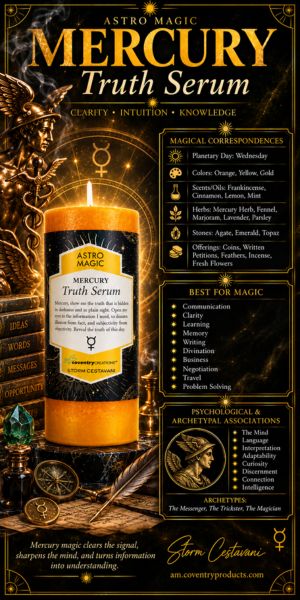 Mercury may be the most entertaining member of the planetary family, largely because Hermes demonstrated an extraordinary talent for questionable behavior almost immediately after his birth.
According to the Homeric Hymn to Hermes, the infant god stole Apollo’s cattle, disguised their tracks, and subsequently denied responsibility with an innocence that would impress a seasoned criminal defense attorney. He also invented the lyre and eventually negotiated an arrangement with Apollo that transformed a divine dispute into a mutually beneficial exchange. Apparently, Hermes had already mastered theft, artistic innovation, and conflict resolution before most infants develop adequate control of their neck muscles.
Mercury’s magical associations include communication, commerce, negotiation, intellectual activity, travel, and the acquisition of knowledge. Mercurial workings are especially appropriate when someone needs assistance with examinations, contracts, business transactions, writing projects, or situations requiring adaptability and quick thinking.
The connection between legitimate commerce and trickery may initially seem peculiar, but both activities require an understanding of how information moves between people. A successful merchant recognizes opportunities, communicates persuasively, and knows how to negotiate. A successful con artist possesses many of the same abilities, although the ethical considerations differ rather substantially.
Jung identified the trickster as a recurring mythological figure whose contradictory behavior can expose the limitations of established expectations. Hermes embodies this quality through his ability to move between boundaries and accomplish what more conventional figures cannot.
Someone preparing for an important interview might undertake a Mercury working to support clear communication and intellectual agility. A writer struggling with a complicated project could approach Mercury for inspiration or assistance in organizing their thoughts.
Mercury’s reputation suggests that intelligence is an extraordinary asset, although possessing it does not automatically guarantee that someone will use it responsibly.
Venus: Aphrodite, Desire, and the Trouble with Getting What You Want
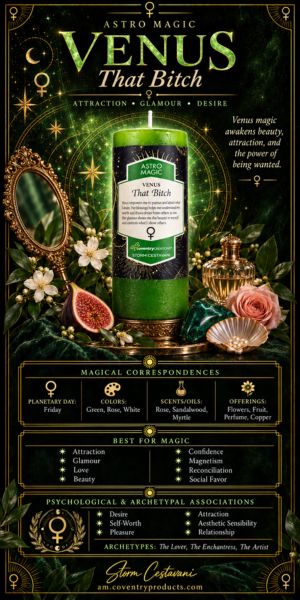 Venus governs love, beauty, pleasure, attraction, artistic expression, and the cultivation of harmonious relationships. Her magical associations make Venusian workings particularly popular among individuals seeking romance, reconciliation, creative inspiration, or greater enjoyment of their lives.
Aphrodite’s mythology, however, offers a considerably more complicated picture than the sentimental associations that frequently surround Venus in contemporary astrology.
Consider the Judgment of Paris, in which Aphrodite competed against Hera and Athena for recognition as the most beautiful goddess. Paris ultimately awarded her the prize after Aphrodite promised him the love of Helen, whose existing marriage created a rather significant obstacle. The resulting events became part of the mythological background of the Trojan War, demonstrating that divine vanity and romantic desire can occasionally produce consequences far beyond the original disagreement.
Venusian magic concerns the forces that attract people toward one another and toward experiences they consider pleasurable or valuable. A practitioner might approach Venus to encourage romantic opportunities, restore goodwill after a disagreement, develop artistic abilities, or cultivate greater harmony within an existing relationship.
Yet attraction itself possesses no inherent guarantee of wisdom. People become fascinated with unavailable partners, pursue pleasures that eventually damage their well-being, and sometimes confuse the intensity of desire with evidence that an experience is worth pursuing.
Venus also governs the appreciation of beauty and the pleasures that make life enjoyable. A Venus working might therefore concern artistic success or improving the atmosphere of a home rather than finding a romantic partner.
Aphrodite understands the power of desire exceptionally well. Whether human beings exercise good judgment once desire takes hold has always been another question entirely.
Mars: Ares, Courage, and the Uses of a Bad Reputation
 Mars has endured centuries of unfavorable publicity, much of it deserved. Ares, the Greek god of war, was associated with violence, bloodshed, and the brutality of conflict. Unlike Athena, whose martial qualities emphasized strategy and disciplined intelligence, Ares frequently represented the more destructive aspects of battle.
Roman Mars, however, enjoyed a broader and more respected position as a protector of the Roman people and a figure associated with military strength and civic security. This distinction is important because the magical significance of Mars extends considerably beyond aggression for its own sake.
Martial magic traditionally concerns courage, protection, competition, defense, and the ability to overcome opposition. A Mars working may be appropriate when an individual needs to confront an adversary, establish stronger boundaries, or develop the determination required to pursue a difficult objective.
Someone preparing for a demanding athletic competition might approach Mars for strength and endurance. An individual who has been consistently intimidated by others may seek martial courage to defend their interests. Even professional circumstances sometimes require the willingness to compete rather than politely waiting for an opportunity to arrive.
Mars also raises an uncomfortable question about anger. People frequently regard anger as something they should eliminate, yet anger can alert us to violations of our boundaries and circumstances that require action. Problems emerge when aggression becomes indiscriminate or when every disagreement is interpreted as an invitation to war.
Ares occasionally behaved as though diplomacy was a personal insult. Fortunately, practitioners can cultivate Martial courage without adopting his entire conflict-resolution strategy.
Jupiter: Zeus, Prosperity, and the Perils of Having Too Much
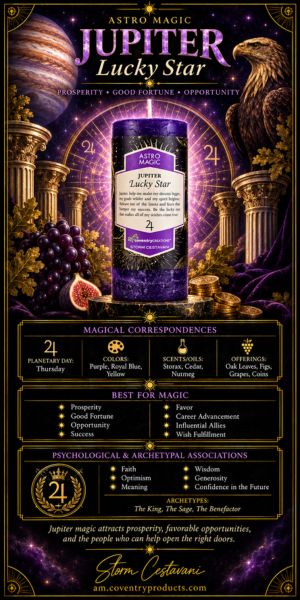 Jupiter is traditionally regarded as the greater benefic, a planet associated with prosperity, opportunity, generosity, justice, wisdom, and the expansion of favorable circumstances. Jupiterian magic frequently concerns professional advancement, financial improvement, patronage, legal affairs, and the pursuit of knowledge.
Zeus provides an extraordinary mythological expression of Jupiterian power. As ruler of Olympus, he maintains divine authority and participates in the establishment of justice and order. Yet his legendary appetite for romantic adventures, questionable disguises, and spectacular abuses of privilege suggests that even supreme authority benefits from occasional restraint.
One could reasonably argue that Zeus needed fewer romantic opportunities and a considerably more effective public relations department.
Jupiterian magic is particularly appropriate when someone wants to expand their circumstances or attract opportunities that support growth. A business owner might undertake a Jupiter working while seeking new clients or financial backing. Someone pursuing higher education could approach Jupiter for wisdom and assistance with their academic ambitions.
However, expansion carries its own difficulties. A successful business can grow beyond its owner’s ability to manage it, while financial abundance may encourage extravagance if spending increases alongside income. Jupiter’s generous qualities become problematic when optimism develops into entitlement or when an individual assumes that good fortune eliminates the need for prudent judgment.
The magical significance of Jupiter therefore includes the capacity to recognize opportunities and develop the resources necessary to benefit from them.
Prosperity can be enormously useful, although anyone familiar with Zeus should understand that receiving more of what we desire does not automatically improve our decision-making.
Saturn: Cronos, Boundaries, and the God Nobody Wants to Invite
 Saturn has one of the most intimidating reputations in traditional astrology, and his mythology does relatively little to improve it.
Cronos overthrew his father Uranus, established himself as ruler of the Titans, and subsequently learned that one of his own children would eventually overthrow him. Determined to prevent this outcome, he swallowed each child as it was born until Rhea successfully concealed Zeus, who later fulfilled the prophecy.
The entire episode illustrates the remarkable lengths to which authority will sometimes go to preserve itself. Cronos was so terrified of losing power that he destroyed the very future he was attempting to control.
Saturn governs time, limitation, discipline, responsibility, endurance, and the structures that establish boundaries around human experience. Saturnian magic is traditionally associated with restriction, protection, endings, stability, and circumstances requiring persistence or restraint.
Although these qualities may sound less appealing than Jupiterian abundance or Venusian pleasure, they possess considerable practical value.
Someone attempting to end an unhealthy association may benefit from Saturn’s capacity to establish separation. A person struggling with chaotic circumstances might undertake a Saturn working to strengthen discipline or create greater stability. Protective workings can also draw upon Saturnian symbolism when the objective involves preventing unwanted influences from entering a particular environment.
Saturn’s mythology offers a particularly interesting illustration of what happens when the desire for security becomes an obsession with control. Jungian psychology might interpret Cronos’s behavior as an expression of authority consumed by fear of displacement, although the myth hardly requires a psychological dissertation to make its warning apparent.
Saturn may be an unpleasant companion when life requires expansion or spontaneity. Yet when a boundary needs to hold, few planetary powers possess a more appropriate reputation.
Benefics and Malefics: Are Some Planets Actually Better Than Others?
Traditional astrology classifies Jupiter and Venus as benefics, while Mars and Saturn are considered malefics. These distinctions describe the planets’ general tendencies to support or complicate matters, although their actual expression depends upon astrological condition and context.
The terminology can create confusion because people naturally associate beneficence with goodness and maleficence with evil. Yet magical practitioners frequently seek the assistance of Mars and Saturn precisely because their traditional qualities are appropriate to the work being undertaken.
Consider someone attempting to separate themselves from an individual who repeatedly violates their boundaries. Venusian reconciliation might be the last thing they need, while Saturnian restriction could provide a more suitable symbolic approach. Similarly, Mars may be especially relevant when courage and confrontation are necessary.
Even Jupiter and Venus can produce troublesome results when their qualities operate without appropriate limits. Excessive expansion can undermine stability, while the pursuit of pleasure may encourage attachments that eventually become burdensome.
The benefic and malefic distinctions deserve a more extensive discussion because they reveal how easily people confuse planetary symbolism with moral judgment. For our purposes, the practical lesson is that the appropriate planet depends upon the nature of the working.
Sometimes you need Jupiter to open a door. On other occasions, you need Saturn to make certain it stays closed.
Choosing the Right Planet for Your Magical Working
Understanding planetary symbolism becomes especially useful when several planets appear relevant to the same situation. Consider someone seeking a professional promotion. Solar magic might support recognition and personal authority, while Jupiterian magic could be directed toward advancement and favorable opportunities. Mercury would be appropriate if the immediate concern involved a crucial interview or negotiation, and Mars might be selected when the position requires competing against several other candidates.
The distinction becomes clearer once the practitioner identifies the specific result they hope to influence. An individual seeking reconciliation after an argument may find Venus appropriate, while someone needing the courage to address a recurring conflict might benefit from Mars. A person struggling with financial opportunities could approach Jupiter, although Saturn may be more relevant if the immediate problem involves maintaining discipline and controlling expenses.
Traditional astrological considerations can further refine these choices, particularly when the practitioner’s natal chart or current planetary conditions are taken into account. However, beginners can develop considerable familiarity with planetary magic simply by studying the traditional powers and learning to distinguish between related objectives.
The process also requires judgment about the limitations of any particular working. A planetary ritual may form part of someone’s spiritual practice, but the individual remains responsible for the practical decisions surrounding the desired outcome. Invoking Mercury before a business negotiation is unlikely to excuse a failure to read the contract, and Jupiter’s generosity should never be mistaken for permission to abandon financial common sense.
Know Your Gods Before Asking for Favors
The seven classical planets represent a remarkably diverse collection of powers, each possessing qualities that can be useful under particular circumstances. Their mythology gives those qualities recognizable personalities, while traditional planetary magic provides methods through which practitioners attempt to engage their influence.
Learning their magical associations requires an appreciation of their temperaments and the different kinds of problems they are suited to address. Venus can encourage connection, Mars can strengthen the capacity to defend ourselves, and Saturn can establish the limits necessary to preserve what we’ve already built. The appropriate choice depends upon what we are attempting to accomplish and whether we understand the consequences of pursuing it.
The gods of classical mythology were rarely models of restraint, emotional maturity, or impeccable judgment. Their stories have survived partly because their behavior remains so recognizable, even after thousands of years. We still encounter authority figures who resemble Zeus, lovers whose decisions would impress Aphrodite, and controlling personalities who might benefit from studying the unfortunate career trajectory of Cronos.
And if we’re going to approach these divine personalities with requests for assistance, a little knowledge of their character seems like a reasonable precaution.
After all, you wouldn’t hire someone without knowing what they’re qualified to do. Why should the gods receive preferential treatment?