
I. The Town the Kingdom Forgot
There is a town on the edge of a kingdom where the fields have gone dry, the roads have broken apart, and the houses seem to be waiting for something that never arrived. Wages, perhaps. Bread, justice, or simply an apology. Something that would prove the people who lived there had not imagined the promise made to them. The place has the haunted stillness of a settlement that was not destroyed in one heroic catastrophe but slowly abandoned after it had served its purpose.
It was not always desolate. Once, its people worked the land that fed the kingdom. They built roads, repaired walls, supplied grain, hauled stone, served armies, and gave themselves to the everyday labor every realm depends on but seldom honors. They were not kings, generals, nobles, or priests, nor were they remembered in monuments or official praise. They were builders and farmers, the hands that made civilization visible and turned survival into structure.
Then the kingdom recovered, and recovery has a strange way of forgetting who paid for it. The city rose again. The gates held and the towers gleamed. The palace regained its shine. Power returned to its proper rooms and sat down as if order had been restored by divine right rather than human labor. Outside the walls, the people who made that restoration possible were left with debt, hunger, abandoned fields, and the insult that follows betrayal: they were treated as if their anger were the true crime.
This is one of the oldest tricks of power. When people are useful, they are called loyal. When they ask to be paid, they are called disruptive. When they endure quietly, they are praised as honorable, and when they demand that honor become food, shelter, wages, or land, they become a threat to order. Eventually, some of them became dangerous, not because poverty is noble and not because every abandoned worker secretly dreams of becoming an outlaw, but because the covenant had broken. They had given their labor, loyalty, and future to a system that later refused to recognize the debt. Unsurprisingly, once that happens, civilization often criminalizes the wound rather than confessing the betrayal.
The official story called them bandits. The deeper story is that they were simply unpaid.
Now, I am not talking about Gary, Indiana. Not yet. This is Westfall, one of the most quietly devastating places in World of Warcraft. However, like all effective fantasy, it works because it tells the truth in mythic prose.
II. The Fantasy Was Telling the Truth
 Westfall isn’t important because it is elaborate fantasy geography. It’s important because it understands a wound that has followed civilization from its earliest walls to its latest industrial ruins: the people who build the kingdom are rarely the people protected by it. In the lore of World of Warcraft, Westfall is a neglected province outside Stormwind, tied to the Defias Brotherhood, a criminalized movement born from betrayal, unpaid labor, and resentment toward a kingdom that used its workers and then discarded them. The details belong to fantasy. The wound does not.
That is why Westfall belongs in a discussion of Chiron in Taurus. Taurus is not merely comfort, pleasure, food, money, and the soft glow of a department store designer candle that costs more than a utility bill. Taurus is the material basis of life. It is land, labor, wages, food, ownership, survival, physical safety, and the slow building of a life that can hold. Taurus is the field, the factory, the paycheck, the table, the bank account, the pantry, and the body that wakes up and does the work again.
When Chiron moves through Taurus, the wound opens in those places. It asks what happens when the material world stops behaving like a trustworthy witness to value. It asks what happens when honest work no longer secures stability, when land no longer guarantees rootedness, when savings no longer promise safety, when the body pays the price of production, and when people discover that loyalty to a system does not mean the system will be loyal in return.
Fantasy was telling the truth because history keeps producing Westfalls—places where labor is used, loyalty is assumed, and repayment is postponed until anger is condemned more easily than betrayal is acknowledged. Gary, Indiana was one of them.
III. Gary, Indiana: The Real Westfall
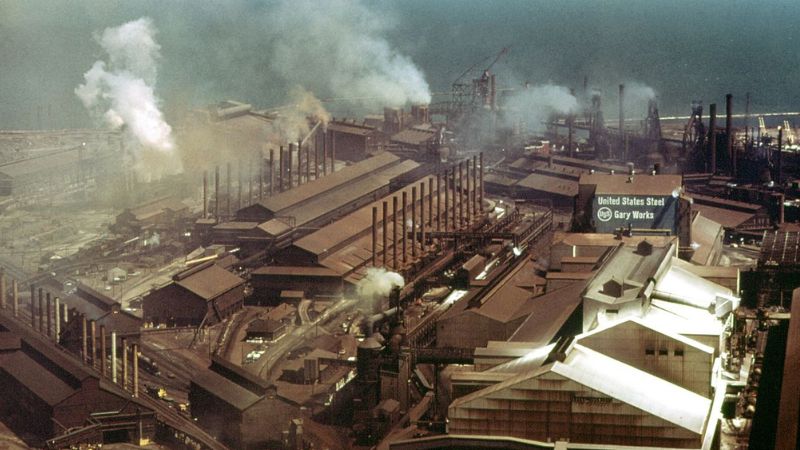
Gary, Indiana was not simply a town with a factory. It was a civic body built around the factory’s promise. Founded in 1906 by U.S. Steel and named for Elbert H. Gary, the company’s founding chairman, the city existed because steel existed. Its streets, neighborhoods, schools, churches, storefronts, families, migrations, ambitions, and wounds all gathered around the immense gravity of industrial labor.
The promise was not subtle. Give us your strength, your discipline, your hours, your back, your lungs, your youth, and your future, and in return you will receive wages, identity, status, community, and a place inside the American material story. The factory did not merely employ people. It organized life. It gave time its rhythm. It shaped masculinity, migration, family structure, civic pride, and the belief that the body’s labor could become a house, a future, and a name that meant something.
That is the covenant at the heart of industrial America. It was never pure, never equally distributed, and never free of exploitation, but it carried enormous symbolic power. It told workers that labor could become stability. It told communities that production could become belonging. It told families that the sacrifices of one generation might become the security of the next.
Then the covenant began to fail. By the late twentieth century, Gary and other industrial cities were wounded by automation, global competition, deindustrialization, corporate restructuring, racialized disinvestment, and a national economy increasingly willing to separate profit from place. The numbers tell part of the story, but numbers can make a wound sound cleaner than it was. A city built around labor does not simply “decline” when the labor that gave it a center begins to disappear. It loses an organizing myth.
A factory decline is never only a factory decline. It is the mortgage that becomes harder to pay, the diner that loses its morning crowd, the school that loses its tax base, the family that loses its future tense, and the young person who learns that leaving may be the only inheritance left. It is a psychic event disguised as an economic one.
This is where Gary becomes the real Westfall. Like Westfall, it reveals what happens when a place gives labor, loyalty, and identity to a larger power, only to discover that the power was never bound by the same covenant. Workers were expected to be loyal to the plant. The town was expected to organize itself around production. Families were expected to trust that sacrifice would become security. But capital was not required to remain loyal to the people, the neighborhood, or the soil that sustained it. Westfall gives us the myth. Gary gives us the address.
IV. Chiron in Taurus: The Collapse of the Material Covenant
Chiron is usually introduced as “the wounded healer,” which is not wrong, but it is incomplete. Before Chiron is wounded, he is already wise. He is already a healer, teacher, mentor, and a hybrid bridge between worlds. He is not wounded because he is foolish, weak, or morally defective. He is wounded through an accident that exposes the cruelty of life’s larger collisions. The wound is unfair. It arrives through forces bigger than personal intention. It cannot be solved by blame alone.
That distinction matters because astrological Chiron is not merely the place where we hurt. Chiron is the place where pain complicates wisdom. It reveals where innocence is violated, where the old explanations stop working, and where healing does not mean returning to the person or world that existed before the injury. The scar remains, but it becomes part of consciousness. It asks for a different relationship to suffering, one that does not romanticize pain but also does not waste it.
In Taurus, Chiron enters the material world. Taurus asks basic questions that become profound when they are threatened. What can I trust? What will feed me? What will sustain me? What is my labor worth? What is my body worth? What belongs to me? What happens when I build slowly, faithfully, and practically, only to discover that the world still may not hold?
Chiron in Taurus is not simply about money issues or low self-worth. Those may be personal expressions of the placement, but the archetype is larger. Chiron in Taurus is the collapse of the material covenant. The material covenant says that work should lead to security, savings should remain available, land should hold value, food should be accessible, the body’s labor should not be wasted, and loyalty to a system should be met with some form of protection. It is the basic promise that effort can become substance. It is the belief that what we build can hold us.
Chiron in Taurus arrives when that bargain fails. It does not ask whether the economy appears strong from a distance, but whether people can live with dignity in the material world being built around them. That is why Westfall matters. That is why Gary matters. That is why the Bonus Army matters. That is why the farm crisis matters. It is also why debates about AI, tariffs, gig work, housing, credit-card debt, and manufacturing are more than partisan theater. Beneath the noise lies a survival question: can ordinary people still turn labor, skill, loyalty, and time into a life that holds?
Astrology is often dismissed as fringe, which is ironic given how often supposedly serious people are blindsided by consequences that have precedent, pattern, and historical documentation.
So, let’s turn to the record…
V. 1976–1983: The Seedbed of the Modern Material Wound
The last major Chiron in Taurus passage ran from roughly May 1976 to June 1983, with a brief interruption from October 1976 through March 1977. That timing is significant because it reshapes how we read the late 1970s and early 1980s. The later crises of the decade did not appear fully formed. Many of them were seeded during this period, when land, labor, energy, finance, health, and trust all began showing signs of structural injury.
The first images are startlingly literal. In June 1976, the Teton Dam in Idaho failed while it was filling for the first time, releasing water into surrounding communities and exposing the fragility of a major public-works promise. A dam is not only concrete and engineering. It is a statement that water can be held, managed, directed, and made safe. Its failure is the failure of material containment, the moment when human confidence in structure is overwhelmed by the physical world it claimed to control.
That same summer, the Big Thompson Flood in Colorado killed at least 144 people after heavy rains overwhelmed the canyon. Homes, roads, vehicles, and bodies were caught inside the same disaster. Again, Taurus speaks through the most basic structures of survival: land, water, shelter, roads, and the assumption that the places holding our lives will remain stable enough to trust.
Then came the toxic revelations. In 1978, Love Canal forced the United States to confront the fact that the ground beneath homes, schools, gardens, and families could be poisoned by buried chemical waste. This is one of the clearest Chiron in Taurus images of the period. Home is supposed to shelter the body. Soil is supposed to receive the seed. The neighborhood is supposed to hold ordinary life. Love Canal revealed that the ground itself could become the source of injury.
Before Bhopal and Chernobyl became the decade’s catastrophic images of poisoned industry, Love Canal revealed the quieter terror that the land beneath ordinary homes could already be contaminated. It was not a distant accident on the far edge of modernity. It was domestic. It was residential. It was under the feet of families who had been told that home was safe.
By 1979, energy itself had become unstable. The oil crisis tied to the Iranian Revolution pushed fuel prices upward and intensified inflationary pressure. Gasoline is not merely gasoline. It is commuting, groceries, heating, manufacturing, shipping, wages, and the cost of being a body moving through the world. When fuel becomes unstable, the entire material order becomes more expensive to inhabit.
The same year brought Three Mile Island, the most serious commercial nuclear accident in United States history, and then the Church Rock uranium mill spill, which released radioactive material near Navajo communities in New Mexico. Together, these events widened the Taurus wound into energy, containment, contamination, land, water, and the moral question of whose bodies are asked to bear the hidden costs of modern power.
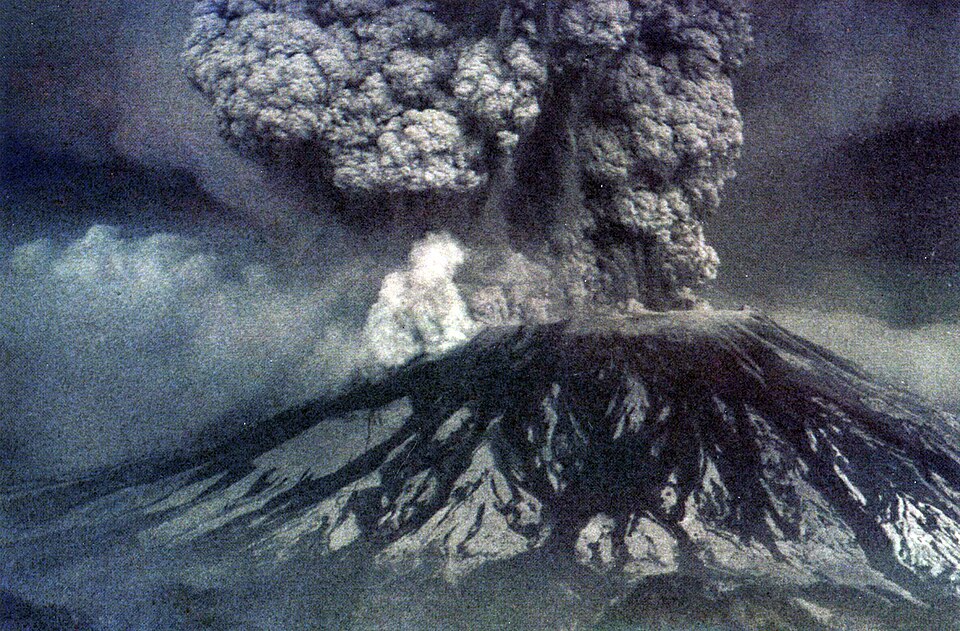
Then 1980 made the earth itself eventful. Mount St. Helens erupted, killing 57 people and destroying homes, bridges, railways, highways, forests, and ordinary assumptions about stable ground. The same year, a severe heat wave and drought struck the United States, devastating crops and intensifying pressure on farmers, consumers, and the body itself. Taurus is never merely symbolic at moments like this. The land is not background. It is the basis of survival.
The economic wound sharpened in the early 1980s. The 1981–1982 recession was driven largely by the Federal Reserve’s tight monetary policy under Paul Volcker, designed to break the inflation crisis of the 1970s. The medicine worked, but it was severe. High interest rates punished borrowers and battered housing, construction, manufacturing, farming, and autos. Inflation had damaged trust in money, and the cure required making money harder, dearer, and more disciplined.
Here is the Chiron in Taurus paradox of that moment: to restore trust in money, the system sacrificed trust in work. Workers, farmers, builders, and borrowers paid the price for the restoration of monetary credibility. The dollar had to be made trustworthy again, but the bodies of ordinary people absorbed the shock. That is not a minor economic detail. It is the moral wound of the period.
Debt also stopped pretending to be wealth. In 1982, Mexico announced that it could no longer service its debt, triggering the Latin American debt crisis. Across the previous decade, borrowed development had been treated as growth, but rising global interest rates turned debt into a trap. At the same time, the seeds of the savings-and-loan crisis were already being planted in the United States, as institutions built around homes, deposits, and long-term security struggled inside a new financial environment shaped by high rates, deregulation, and risky lending.
The body entered the public crisis as well. AIDS was first reported in the CDC’s Morbidity and Mortality Weekly Report in June 1981. This belongs in the Chiron in Taurus story not because Taurus is illness, but because Taurus is embodied life: touch, sexuality, survival, care, and the material question of which bodies receive protection. AIDS exposed not only a medical crisis, but a wound in the moral economy of care. Some bodies had to become catastrophic before the system agreed that they were worth saving.
By 1983, the farm crisis had become impossible to ignore. Farm debt, high interest rates, falling commodity prices, collapsing land values, and pressure on agricultural banks all revealed the same Taurus injury. The land still existed, but it no longer secured the life built upon it. That is the Taurus nightmare. The farm is not merely property. It is inheritance, family continuity, food, labor, ancestry, and the belief that effort can become permanence.
Likewise, Gary was living inside the same wound. The factory still existed, but it no longer secured the city built around it
VI. We Have Seen This Wound Before: 1926–1934
The earlier Chiron in Taurus passage, from the mid-1920s into the mid-1930s, tells the same story in another historical costume. It begins, fittingly, with land. Florida had become one of the great projection screens of the American imagination: sunshine, health, leisure, escape from northern winters, easier living, retirement, reinvention, and the belief that land itself could become salvation. During the 1920s Florida land boom, speculation, easy credit, aggressive promotion, and rapidly rising property values inflated land into fantasy capital. People were not merely buying property. They were buying a future self: warmer, richer, freer, healthier, and ahead of the crowd.
Then the boom collapsed, and the fantasy met the ground. The Florida story reveals a deep Taurus distortion: land stopped being land and became a dream instrument. The promise of rootedness became a speculative fever. The thing that was supposed to represent stability became a screen for appetite, escape, and imagined wealth.
That mythology has never fully died. Florida still carries the promise of permanent summer, reinvention, retirement, and escape. Yet the modern version now meets rising housing costs, insurance pressures, stagnant wages, and the reality that paradise can become materially difficult to inhabit. The fantasy of land as salvation keeps meeting the cost of living on the land.
Then came the stock market crash of 1929, which shattered one of the core material assumptions of the decade: that prosperity was stable, cumulative, and deserved. The market did not simply fall. It exposed the danger of mistaking price for reality. That distinction sits at the heart of Chiron in Taurus. Price is what the system says something is worth. Value is the deeper truth the system may or may not recognize.
The banking crisis deepened the injury. By 1933, trust in the financial system had deteriorated so badly that Roosevelt declared a national bank holiday. A bank is not merely a building that holds money. It is a symbolic container. It holds the promise that value can be stored, protected, and returned. When banks fail, the wound is not only financial. It is existential. The place designed to safeguard value becomes the place where value feels endangered.
The Dust Bowl brought the same wound down into the soil. Drought, wind erosion, and destructive farming practices stripped the Great Plains of topsoil. Farms failed, crops died, families migrated, and the land itself seemed to withdraw its promise. If the banking crisis wounded stored value, the Dust Bowl wounded embodied value. It asked what happens when the earth can no longer sustain the people who depend upon it.
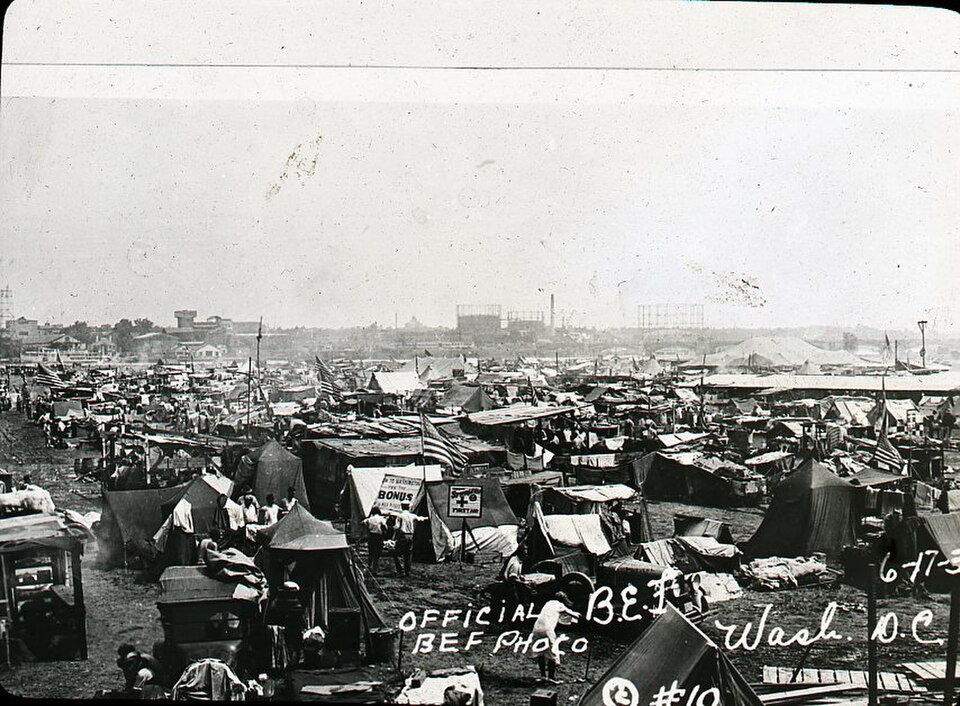
Then came the Bonus Army. In 1932, thousands of World War I veterans, their families, and supporters gathered in Washington, D.C. to demand early payment of service-bonus certificates. These men had already given their bodies to the nation. During the Depression, symbolic honor was not enough. A bonus due in the future could not feed a family in the present.
The Bonus Army marched because honor could not feed a starving veteran. Westfall tells the same story in fantasy form: the builders and defenders of a kingdom become dangerous only after the kingdom refuses to pay what it owes.
Smoot-Hawley gave the era its protectionist reflex. The tariff was intended to protect American farmers and businesses, but it became one of the great cautionary examples of fear-based contraction during an economic crisis. Chiron in Taurus often shows the difference between protection and repair. Protection closes the gate. Repair asks why the village is starving.
VII. The Next Cycle: What Is Being Planted Now?
This is where we have to be precise. Astrology is not an invitation to play disaster bingo or to catastrophize. Chiron in Taurus does not mean a stock market crash must happen, Florida must collapse, AI must devour every job, or everyone should start hoarding beans in the basement and calling it spiritual preparation.
At its best, astrology is a way of reading patterns. It asks where the wound is beginning to form, which parts of history are repeating, and what a culture is learning to accept before the consequences become too obvious to ignore.
So where is the material covenant already cracking? AI is one obvious place. Recent corporate language around automation, restructuring, and efficiency reveals a deeper wound than job loss alone. Not every AI layoff means a machine has directly replaced a human being. Sometimes AI is the tool. Sometimes it is the investment priority. Sometimes it is the costume ordinary cost-cutting wears when it wants to look like innovation. But in all three cases, human labor is forced to prove its value against systems increasingly trained to see people as expense before contribution.
Gig work belongs to the same story. Many workers no longer want to surrender their bodies, schedules, and futures to jobs that feel rigid, underpaid, monitored, or humiliating. That refusal belongs partly to Chiron in Aries, which exposed the wound of autonomy and the right to say, “My life force belongs to me.” Chiron in Taurus asks the harder follow-up: can that reclaimed autonomy be sustained? Freedom is not fully free if it cannot pay rent.
Tariffs and the fantasy of a manufacturing revival also belong here. The promise sounds noble: bring production home, rebuild the industrial base, create jobs, restore dignity to labor. But tariffs can make imports more expensive. They cannot, by themselves, rebuild trust. They cannot make capital loyal, guarantee long-term investment, train workers, stabilize towns, or convince younger generations to return to factory labor after decades of watching industrial communities get used, abandoned, and blamed for their own decline.
You cannot tariff capital into loyalty, and you cannot tariff workers into believing again.
Housing is another wound. If disciplined adulthood no longer buys stability, if people work, save, adapt, and still cannot afford shelter, then the material covenant is already cracking. Debt belongs in the same field. When officials point to credit-card spending as proof that consumers are strong, Chiron in Taurus asks a less convenient question: are people spending from abundance, or borrowing to survive?
A culture in denial calls it consumer strength. Chiron in Taurus asks whether it is survival on borrowed money.
Prediction markets may be one of the strangest early symbols of the cycle. Platforms that turn elections, policy decisions, legal outcomes, wars, sports, entertainment, and news events into tradable probabilities reveal a culture trying to convert uncertainty into price. That does not make the future more trustworthy. It makes anxiety tradable.
Prediction markets are what happens when a culture no longer trusts the future, so it tries to turn the future into a price.
And then there is food, fuel, farming, insurance, and the basic cost of embodied life. Taurus always brings us back to the body, not as a concept, brand, or wellness aesthetic, but as the body that eats, drives to work, pays rent, needs medicine, sweats in heat, and absorbs the cost of being alive. A household can keep spending and still be weakening. A market can keep moving and still be detached from ordinary security. A system can report activity while the people inside it feel less stable by the year.
The measurement says motion. The body says strain.
VIII. What Still Has Value When the System Stops Reflecting It?
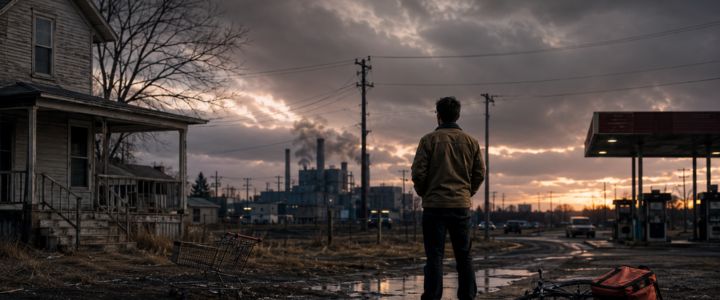
Westfall is not real, but it is true. Gary is real, and it became mythic because America has never known what to do with places that reveal the cost of its promises. The Bonus Army was real. The Dust Bowl was real. The farm crisis was real. Love Canal was real. The steel towns were real. The debt crises were real. The current anxiety around AI, tariffs, housing, credit cards, and work is real. Chiron in Taurus gathers these stories not because they are identical, but because they return to the same wound: what happens when the material world stops honoring the human life that sustains it?
The answer cannot be a rejection of material life. Taurus would never accept that, and neither should we. Food matters. Money matters. Shelter matters. Land matters. Wages matter. The body matters. Security matters. Anyone who tells people to transcend money while someone else is paying their bills should be spiritually audited.
The medicine of Chiron in Taurus is not pretending that material reality is beneath us. It is learning to tell the difference between true value and broken measurements of value. Price is not worth. Productivity is not dignity. Employment is not always security. Spending is not always prosperity. Land is not always safety. A factory is not always a covenant. A market is not always an oracle. A system can praise your labor and still abandon your body.
That is the wound. The healing begins when we stop confusing the system’s reflection with the truth of human value. But we cannot stop there, because Chiron in Taurus is not satisfied with spiritual consolation that leaves people hungry. It asks us to build differently, feed differently, work differently, protect the body differently, honor labor differently, and repair the places that have been used and discarded. It asks us to stop calling people resilient when what we really mean is that we have grown accustomed to watching them survive what should have been changed.
Westfall is what happens when the kingdom forgets who built it. Gary is what happens when the factory forgets the city it made. Chiron in Taurus is what happens when the material world stops honoring the human life that sustains it.
The next cycle is already asking its question. When people give their labor, bodies, loyalty, and futures to a system, will that system honor the debt, or will history make another Westfall?

Sources and Notes:
For background on Westfall and the Defias Brotherhood storyline, including the connection to former stonemasons, Stormwind, Westfall, poverty, revenge, and the unpaid labor grievance, see Wowpedia’s “Defias Brotherhood” entry.
Gary, Indiana was founded in 1906 by U.S. Steel as a company town serving its steel mills and was named for Elbert Henry Gary, the founding chairman of U.S. Steel.
For a contemporary long-form account of Gary’s ongoing relationship with U.S. Steel, Gary Works, population decline, industrial dependency, pollution, abandoned buildings, and the lingering civic shadow of the steel industry, see Paige Williams, “Gary, Indiana, and the Long Shadow of U.S. Steel,” The New Yorker, February 10, 2025.
Chiron transit dates were calculated using a tropical, geocentric ephemeris. The dates used here are May 1976 to June 1983, with Chiron briefly leaving Taurus from October 1976 through March 1977. Exact ingress and retrograde dates may vary slightly depending on software settings, zodiac, and time zone.
The Teton Dam failed catastrophically on June 5, 1976, releasing floodwaters into downstream Idaho communities, killing 11 people, and becoming a catalyst for the Bureau of Reclamation’s dam-safety program.
The Big Thompson Flood occurred on July 31, 1976, after extreme rainfall in Colorado’s Big Thompson Canyon. It killed at least 144 people, injured more than 250, destroyed hundreds of homes and vehicles, and became one of Colorado’s deadliest floods.
Love Canal became a national toxic-waste crisis in 1978, when President Jimmy Carter declared a federal health emergency and federal funds were used in response to chemical contamination beneath a residential neighborhood. Love Canal later became closely associated with the creation of Superfund.
The 1978–1979 Iranian Revolution disrupted global oil supply, contributed to price spikes, and helped trigger stagflation and recession in the United States.
The Three Mile Island accident began on March 28, 1979, and is widely described as the most serious accident in U.S. commercial nuclear power history.
The Church Rock uranium mill spill occurred on July 16, 1979, when a tailings pond breached near Church Rock, New Mexico, releasing radioactive and acidic waste into the Puerco River system near Navajo lands.
Mount St. Helens erupted on May 18, 1980. The eruption killed about 57 people and destroyed houses, bridges, railways, highways, and large areas of forest.
The 1980 U.S. heat wave and drought affected much of the Midwest and Southern Plains, killed at least 1,700 people, and caused roughly $20 billion in agricultural damage.
The 1981–1982 recession lasted from July 1981 to November 1982 and was triggered by tight monetary policy designed to fight inflation. Manufacturing, construction, and auto industries were especially affected, with unemployment reaching nearly 11 percent late in 1982.
The Latin American debt crisis began in 1982 after extensive borrowing during the 1970s, rising global interest rates, and Mexico’s August 1982 announcement that it could no longer service its debt.
The savings-and-loan crisis was rooted in late-1970s and early-1980s inflation and interest-rate pressures, which damaged thrifts holding long-term fixed-rate mortgages while needing to compete for deposits. Deregulatory responses later contributed to deeper industry distress.
The first CDC report later recognized as marking the beginning of the AIDS crisis was published in the Morbidity and Mortality Weekly Report on June 5, 1981, describing five cases of Pneumocystis pneumonia in Los Angeles.
The 1980s farm crisis was driven by farm debt, high interest rates, falling commodity prices, collapsing farmland values, and mounting pressure on agricultural banks. Iowa farmland lost 60 percent of its value between 1981 and 1986.
The 1920s Florida land boom was fueled by outside speculation, easy credit, aggressive promotion, rapidly appreciating land values, and the fantasy of Florida as a place of wealth, climate, escape, and reinvention. Its collapse preceded the national Great Depression and was worsened by the 1926 Miami hurricane.
Florida’s modern mythology of escape and reinvention is now meeting a new affordability crisis. Axios reported in April 2026 that Florida’s migration boom had faded as rising housing costs, stagnant wages, inflation, and affordability pressures pushed some residents out.
The 1929 stock market crash followed a major speculative boom. The Dow Jones Industrial Average peaked in September 1929, fell nearly 13 percent on Black Monday, nearly 12 percent on Black Tuesday, and by mid-November had lost almost half its value.
Roosevelt declared the national bank holiday on March 6, 1933, suspending banking transactions for a week in an effort to stem failures and restore confidence in the financial system.
The Dust Bowl was caused by severe drought combined with farming practices that left topsoil vulnerable to wind erosion, damaging agriculture across the Great Plains during the 1930s.
The Bonus Army was the 1932 movement of World War I veterans, families, and supporters who gathered in Washington, D.C. to demand early payment of service-bonus certificates during the Depression.
The Smoot-Hawley Tariff Act of 1930 was designed to protect American farmers and businesses by raising import duties, but it provoked international retaliation and is widely treated as a cautionary example of protectionist policy during economic crisis.
Standard Chartered announced plans to reduce more than 7,000 roles by 2030 while increasing automation and AI adoption. Reporting on the announcement included the phrase “lower-value human capital,” which later drew public criticism and an apology from CEO Bill Winters.
Analysts have questioned whether tariffs alone can revive U.S. manufacturing employment at historic scale, citing high labor costs, worker shortages, skill mismatches, demographic constraints, and the long investment horizon required for domestic production.
The New York Fed reported that total household debt reached $18.8 trillion in Q1 2026, with credit-card balances at $1.25 trillion and 4.8 percent of outstanding debt in some stage of delinquency.
Prediction-market platforms such as Kalshi and Polymarket have seen rising popularity and greater scrutiny. Reuters reported in May 2026 that suspicious trades had surged, raising concerns about insider information and the use of event contracts tied to politics, policy, and other real-world outcomes.