There’s a question I think everyone interested in planetary magic should eventually ask themselves: Do I actually want to develop relationships with the gods?
It’s a reasonable question, and the answer doesn’t have to be yes.
Many people who purchase my Astro Magic candles want to accomplish something specific. Perhaps they’re hoping to attract a romantic partner, improve their finances, find a better job, or resolve a problem that’s been causing considerable frustration. They prepare their petitions, light their candles, and continue with their lives. Some may never become particularly interested in the mythology or spiritual traditions associated with the planetary powers they’re invoking.
I don’t have a problem with that. I believe candle magic can work without requiring someone to establish a devotional relationship with a deity. Not everyone who wants assistance from Jupiter needs to spend their evenings reading Roman mythology, and I’m certainly not going to insist that purchasing a candle requires a lifelong commitment to religious study.
However, some practitioners discover that their interest extends beyond individual magical workings. They begin studying planetary correspondences, experimenting with astrological timing, and exploring the different qualities of the gods. Eventually, they become curious about the planetary powers themselves. They want to understand their mythology, their personalities, and what it might mean to establish an ongoing relationship with them.
For those practitioners, I believe planetary attunement is worth serious consideration.
Attunement involves cultivating familiarity with a planetary deity through study, contemplation, prayer, imagery, and continued engagement. In my experience, it can deepen someone’s understanding of planetary magic while influencing how they understand themselves and navigate their lives.
I’ve practiced planetary magic for more than twenty-five years, and some of my most meaningful experiences have emerged from these relationships. I haven’t found every deity equally easy to approach, and my understanding of them has changed considerably over time. But that’s part of what makes the process interesting.
My First Relationship Was with Apollo
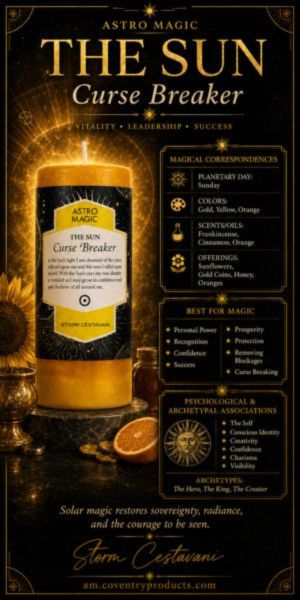 I didn’t begin my devotional practice with Saturn, despite the considerable respect I’ve developed for him. I began with Apollo.
As a Leo, I’d always felt an affinity for the solar archetype, and Apollo’s mythology fascinated me. I spent time reading his stories, studying his hymns, and exploring his character through the depth-psychological approach that informs much of my astrological work.
Apollo is an extraordinary figure. He presides over music, prophecy, healing, and several other important areas of ancient Greek religious life. His mythology is filled with beauty, remarkable accomplishments, conflict, and disappointment. The more I studied him, the more interested I became in the complications beneath the familiar image of the radiant solar god.
One of the things that affected me most was Apollo’s suffering in love.
His pursuit of Daphne, for example, ends with her transformation into a laurel tree as she escapes his advances. It’s a disturbing story, particularly from Daphne’s perspective, and it certainly doesn’t portray Apollo as an uncomplicated romantic hero. His extraordinary gifts and divine status cannot compel someone else to return his affection.
Through stories like this, I began thinking about the difficulties involved in becoming an individual.
Personal development can create problems in relationships, particularly when someone begins pursuing desires or ambitions that don’t fit comfortably with another person’s expectations. Becoming more conscious of who you are sometimes requires making decisions other people don’t understand or appreciate. Relationships may change as a result, and some may not survive those changes.
As I continued working with Apollo, another realization became increasingly important. Other people are engaged in their own processes of development, with needs, ambitions, and desires that deserve consideration alongside mine.
My own journey toward individuality didn’t grant me exclusive ownership of the process.
That understanding changed how I approached relationships. I became more conscious of what other people wanted from their lives, even when their priorities differed substantially from my own. Apollo’s mythology helped me appreciate the tension between pursuing personal development and respecting another person’s freedom to do the same.
I still return to these stories, and I often discover meanings I hadn’t previously considered. A myth I encountered in my teens may reveal something entirely different as I approach it with decades of additional experience. The story remains the same, but I’m capable of recognizing more of its complexity.
This is one reason mythology is so valuable in planetary attunement. A correspondence table can tell you that the Sun governs vitality, identity, and authority. Apollo’s stories reveal what happens when those qualities become entangled with pride, relationships, ambition, desire, and the consequences of individual choices.
At the end of the day, the gods are considerably more interesting than their keywords.
The Composition Notebooks
One of my favorite methods of planetary attunement involves something exceptionally sophisticated and inexpensive.
A composition notebook.
Actually, several composition notebooks. I’ve accumulated quite a collection over the years, with notebooks devoted to nearly all the planetary gods.
Inside them, I collect photographs, artwork, planetary symbols, mythology, and written hymns. I also write letters to the deities, discussing experiences from my life and asking for guidance about matters that concern me.
My Saturn notebook, for example, contains correspondence about my business, professional ambitions, and the responsibilities involved in building something sustainable. I write about situations that have required patience, experiences that have challenged my acceptance of circumstances, and progress I’ve made in areas traditionally associated with Saturn.
If I recognize growth in one of those areas, I thank him for his assistance and continued guidance.
The language I use isn’t especially ceremonial, and at times not real sophisticated. Sometimes I begin a letter with something like, “Dude, you won’t believe what happened,” and proceed to describe whatever has been occupying my attention.
I approach Saturn with respect, but I see no reason to pretend I’m someone else whenever I communicate with him. After years of developing the relationship, my understanding is that he’s familiar with my personality and the way I express myself.
I view the planetary gods as friends. That doesn’t mean I consider their powers trivial or believe I can approach them without consideration. It means the relationships have become personal enough that conversation feels natural.
The notebooks also preserve something valuable: a history of those relationships. Looking through older entries can reveal problems that once seemed overwhelming, ambitions that have changed, and qualities I’ve gradually learned to express with greater confidence.
Keeping a notebook isn’t a formal requirement of planetary magic. It’s simply a method that works exceptionally well for me. Someone else might prefer reciting hymns, creating artwork, maintaining a devotional altar, or spending time contemplating a planetary image.
The practice doesn’t need to be expensive or elaborate. A notebook costs a few dollars or less. The more substantial investment is the willingness to keep returning to it.
Venus Is My BFF
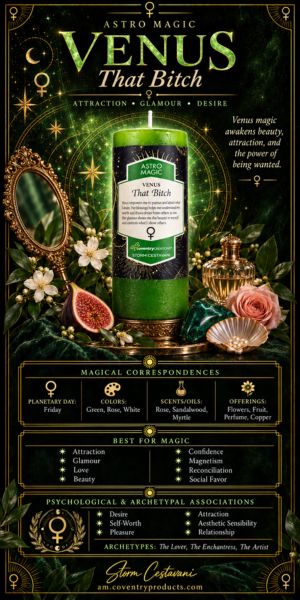 Although Apollo introduced me to this kind of devotional relationship, Venus has become the planetary deity I communicate with most frequently.
Venus rules my Libra Ascendant, making her particularly important within my natal horoscope. I’ve always strongly recommended that people interested in planetary magic spend serious time developing a relationship with the ruler of their Ascendant.
In traditional astrology, the Ascendant ruler has an important relationship with the individual and the circumstances of their life. This gives someone pursuing attunement a meaningful way to explore a planetary power closely connected with their personal astrological symbolism.
In my case, Venus has become part of my everyday routine.
I frequently talk to her while doing my skincare or attending to activities involving beauty, appearance, and attraction. But our conversations aren’t limited to those subjects. I talk about what I need to accomplish during the day, problems I’m dealing with, things that worry me, and whatever else happens to be on my mind.
She’s essentially my go-to companion for journaling and ordinary conversation.
I don’t necessarily make an offering or prepare a formal invocation every time I speak to her. Sometimes I’m simply sharing what’s happening in my life, much as I would with a close friend. And not to confuse anyone, I am not doing love magic all day. That would be exhausting in every sense of the word.
This may seem overly informal to someone who associates divine relationships with elaborate rituals and carefully constructed prayers. I enjoy traditional devotional practices myself, but I’ve never believed reverence requires abandoning your personality.
Venus has become part of how I experience my daily life, and I appreciate being able to communicate with her without turning every conversation into another magical petition.
The Planets We Find Difficult
I wish I could say my relationships with every planetary deity developed as naturally as my relationship with Venus.
They haven’t.
The Moon is a particularly interesting example. My natal Moon is in Capricorn, the sign of her detriment, and I’ve never felt the same natural affinity for lunar magic that many practitioners describe.
I realize that admission may be unpopular in certain Wiccan circles, where lunar practices occupy a prominent place. Nevertheless, I don’t see much value in pretending that every planetary energy appeals to me equally. I try to communicate with the Moon at least once a week, even though the relationship requires more deliberate attention.
Mars has presented an entirely different challenge.
For much of my life, I struggled with aggressive people. Certain expressions of anger, confrontation, and competitiveness particularly irritated me, especially when I encountered people whose approach to life seemed fundamentally different from my own.
Astrologically, there’s an interesting context for that experience. Aries is on my seventh-house cusp, making Mars the ruler of my house of relationships. Mars is also my out-of-sect malefic, and I have a Sun–Mars conjunction in Leo.
Over the past several years, I’ve made a conscious effort to develop a stronger relationship with Mars.
As I spent more time working with him, I began understanding something about the people whose behavior had previously disturbed me.
Aggression can sometimes emerge from frustrated desire. Someone may feel blocked from pursuing something important, disappointed by an inability to achieve a goal, or resentful because circumstances don’t accommodate what they want. Those frustrations can become expressed through anger and confrontation.
Recognizing those possibilities helped me approach difficult people with greater acceptance.
I became more willing to acknowledge that everyone has their own struggles, ambitions, and ways of navigating the world. I didn’t need to approve of every behavior or tolerate someone mistreating me. But I could allow people to be who they were without continually experiencing their personalities as a challenge to my own.
At the same time, Mars helped me become more comfortable asserting myself. I’ve grown increasingly willing to pursue my ambitions, establish boundaries, and set aside expectations that other people might have concerning how I should live.
The result has been rather interesting. Developing a relationship with the god of conflict has helped me become less reactive to conflict.
I’ve come to appreciate the idea that everyone is a work of art, engaged in the difficult and sometimes messy process of becoming themselves. That includes people whose lives look nothing like mine. I can pursue my own direction while allowing other people to pursue theirs. Mars has helped me become more comfortable with both.
This is one of the reasons I value attunement. The benefits of working with a planetary deity aren’t necessarily limited to accomplishing individual magical objectives. Sometimes the relationship changes how we experience the world.
How to Begin Planetary Attunement
If you’re interested in developing relationships with the planetary gods, my recommendation is simple: begin with a planet you’re naturally drawn toward.
There’s no reason to make your first experience unnecessarily intimidating by selecting the deity you find most difficult. I began with Apollo because his mythology interested me, and that curiosity encouraged me to continue learning.
You might feel drawn to Venus because you love art, beauty, and relationships. Perhaps Mercury fascinates you because you enjoy language, communication, or intellectual exploration. Someone interested in professional ambition or personal discipline might find Saturn particularly compelling.
Curiosity is a perfectly reasonable place to begin.
Once you’ve selected a deity, spend time becoming acquainted with the mythology. Read the stories and pay attention to the details that interest or trouble you. Explore the god’s relationships with other deities, their accomplishments, their failures, and the contradictions that make their stories worth studying.
I particularly recommend Theoi for people interested in Greek mythology. It’s an excellent resource for exploring ancient literary traditions, mythological accounts, and hymns.
You can also read poetry and hymns devoted to the deity. The Homeric Hymns, for instance, offer a way to encounter the language through which ancient people honored the Greek gods. You don’t have to understand every historical detail immediately. Begin by reading and noticing which descriptions or passages attract your attention.
Artwork offers another avenue. Collect images that evoke the deity for you, whether they’re classical paintings, ancient sculptures, or contemporary interpretations. Colors and planetary symbols can also become part of your practice, giving you visual material to contemplate as you become familiar with the deity.
You can even begin by repeating the deity’s name.
Concentrating upon a name gives your attention a particular focus. You might spend several minutes quietly repeating it, allowing your thoughts to settle upon the planetary power you’re seeking to understand.
And, of course, you can begin writing letters.
You don’t need to compose magnificent prayers or imitate the language of an ancient religious ceremony. Write about what’s happening in your life, ask questions, discuss your experiences, or express gratitude for something you associate with the deity’s assistance.
Although I recommend beginning with a planet that interests you, I also encourage serious consideration of the ruler of your Ascendant. Its traditional significations can provide a valuable starting point for examining qualities that hold particular importance within your natal horoscope.
I don’t prescribe a rigid schedule for these activities. Some people may prefer spending time with a deity on its planetary day, while others might incorporate attunement into ordinary routines. Consistency is valuable, but devotion shouldn’t become another exhausting obligation.
The greatest challenge is often the effort required to sustain the practice. Beginners can become intimidated by the amount of material they imagine they need to study or the commitment they believe the gods expect from them.
I’d rather see someone develop a modest practice they genuinely enjoy than construct an elaborate schedule they abandon after two weeks.
Recognizing a Developing Relationship
As my relationships with the planetary gods have developed, I’ve experienced what I understand as communication from them in different forms.
Sometimes that communication occurs through thoughts that feel clear, distinct, and different from my ordinary thinking. I recognize those experiences as part of my devotional relationships, although other people may interpret similar experiences differently.
At other times, something happens in everyday life that carries particular planetary significance.
I remember becoming increasingly frustrated when I first began working with Canva. I had very little design experience and was struggling to develop the skills I wanted. Around that time, an Instagram advertisement featuring an older man appeared, introducing me to a course on Udemy.
I purchased it, and it became one of the most valuable educational programs I’ve taken.
I interpreted the experience through my relationship with Saturn. I was confronting a limitation in my knowledge, needed structured instruction, and encountered an older male teacher whose course helped me develop the skills I lacked.
Could the advertisement have appeared through ordinary recommendation algorithms? Certainly. What mattered to me was the significance I found in the circumstances and how naturally they resonated with the Saturnian themes I’d spent years contemplating.
The experience didn’t eliminate the need for work. I still had to complete the lessons and practice the skills. But I experienced the opportunity as a form of Saturnian assistance arriving through an ordinary situation.
I wouldn’t encourage beginners to assume that every advertisement, coincidence, or unexpected event is a message from a deity. Nor would I suggest that unusual forms of communication are necessary for a meaningful devotional relationship.
People experience spiritual practice differently. Some find meaning through dreams or symbolic events, while others develop their understanding through study, prayer, meditation, and reflection.
For me, discernment remains important. I consider the circumstances, the symbolism, and whether an interpretation is useful rather than treating every passing thought as an instruction that must be obeyed.
Becoming More Fully Yourself
I believe planetary attunement can improve magical practice. Someone who has spent years becoming familiar with Jupiter may understand the complications of expansion more thoroughly than someone who knows him only as a god associated with prosperity. A practitioner who has developed a relationship with Saturn may approach his restrictive powers with greater confidence and a clearer understanding of when those powers are appropriate.
That familiarity can influence how we formulate petitions, recognize planetary symbolism, and decide which magical workings to undertake. In my experience, it contributes to better results, although I wouldn’t suggest that devotional practice guarantees the outcome of a particular working.
But the larger value of attunement extends beyond candle magic.
My relationships with the planetary gods have developed alongside my understanding of myself. I’ve returned to mythology with new experiences, discovered qualities I previously struggled to appreciate, and become more conscious of how planetary symbolism appears in my relationships and decisions.
From a depth-psychological perspective, I find that particularly meaningful. The planetary gods represent archetypal patterns that we can encounter through our experiences, relationships, and inner lives. Engaging with those patterns consciously can reveal aspects of ourselves we haven’t fully understood or learned to express.
I also approach the gods as deities with whom I’ve developed personal relationships. I don’t feel compelled to resolve those two perspectives into a single explanation. Both have contributed to my experience of planetary magic.
After more than twenty-five years, I still return to the mythology, write letters, and discover things about the planetary powers that I hadn’t previously appreciated. My understanding continues to change because I continue to change.
If you’re perfectly content reading the weekly forecast, lighting an Astro Magic candle, and continuing with your life, enjoy the practice in whatever way serves you. There’s no requirement to develop the kind of relationships I’ve described.
If you find yourself increasingly interested in the planetary gods, however, attunement offers a place to begin. Choose a deity who interests you, spend time with the mythology, explore the hymns and artwork, and begin a conversation that can develop alongside your life.
You may discover that the most significant results aren’t always the circumstances you hoped to influence through a particular magical working. Sometimes they’re changes in how you understand your desires, recognize your limitations, approach other people, or pursue the life you want to create.
After all, I believe the larger purpose of this work is to become more fully who you were meant to be.
And that is a relationship worth cultivating.